
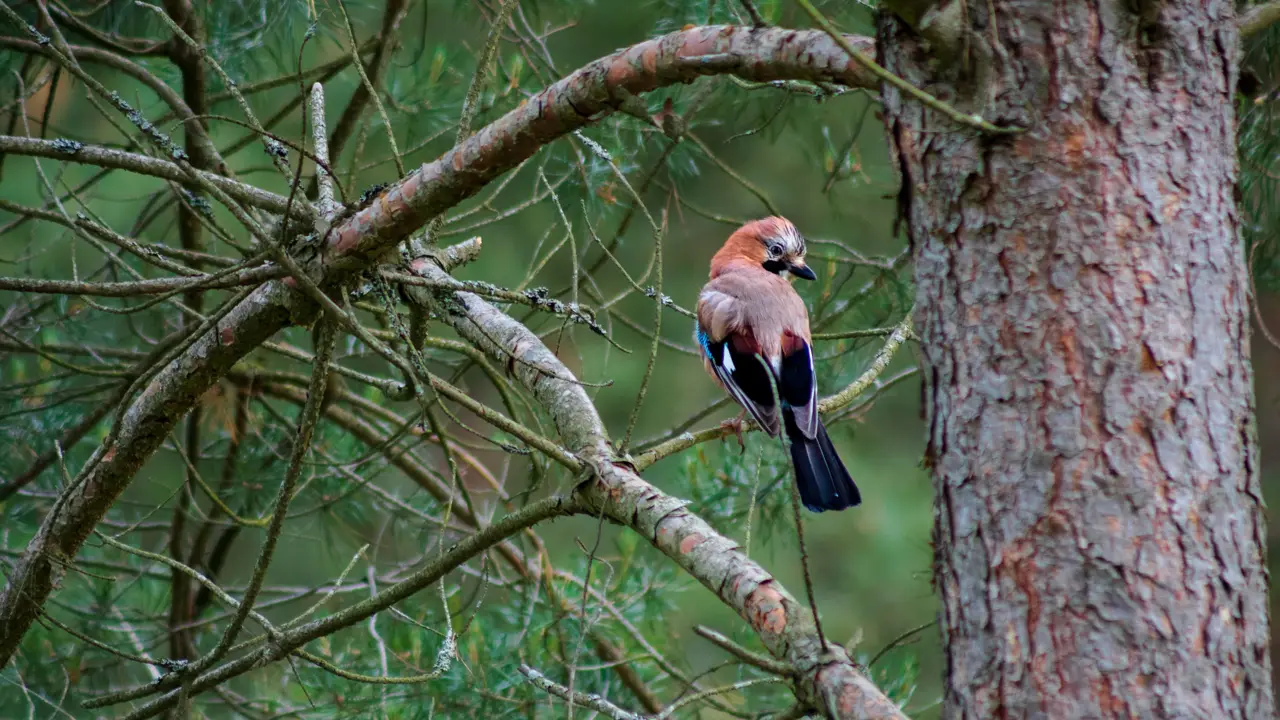
Bring Your Binoculars to Lookout Mountain
Wooded slopes, streams, open edges, canyon overlooks, and nearby lakes give birdwatchers a variety of habitats to explore during a stay at DeSoto Bluffs Campground. Listen around camp in the morning, then visit DeSoto State Park, Little River Canyon, or area waterways to look for a different mix of birds.
Spring | March–May
Spring brings returning songbirds and northbound migrants. As trees leaf out, the best way to find many species is to pause and listen for their calls.
- Warblers: Look for Hooded, Kentucky, Black-and-white, Yellow-throated, and Prairie Warblers in suitable woods, stream corridors, and brushy openings. Northern Parulas can be found in trees along the Little River.
- Wood Thrush: Listen for its flute-like song in mature, shaded woodland, especially from spring into early summer.
- Scarlet Tanager: Watch the upper canopy at DeSoto State Park for the brilliant red-and-black male.
- Vireos: Yellow-throated Vireos favor woodland canopy; Red-eyed Vireos may be heard along the canyon.
- Broad-winged Hawk: Scan the sky over ridges and overlooks for migrating hawks; some remain to breed in the area.
Where to look: DeSoto State Park’s Talmadge Butler Boardwalk, woodland trails, and the Little River Canyon corridor.
Summer | June–August
Summer birding rewards an early start. Listen along shaded trails before the day warms, and check sunny field edges for birds perched in shrubs.
- Hooded and Kentucky Warblers: Listen in leafy woodland and dense understory, where these birds can be easier to hear than see.
- Wood Thrush and Yellow-throated Vireo: Their songs carry through the forest in late spring and early summer.
- Indigo Bunting: Look for a singing male in a sunny clearing or along a brushy edge.
- Yellow-breasted Chat and Prairie Warbler: Check open, shrubby habitat along the Little River Canyon scenic corridor.
- Louisiana Waterthrush and Belted Kingfisher: Watch stream banks for the waterthrush and listen for the kingfisher’s rattling call near the river.
- Osprey: Scan open water on a trip toward Lake Guntersville for this fish-hunting raptor.
Where to look: Shaded park trails at dawn, brushy openings near the canyon, and river or lake overlooks.
Fall | September–November
Fall migration brings changing flocks through the region. A quiet woodland edge can be busy one morning and nearly still the next, so take time to scan each layer of the trees.
- Migrating warblers: Watch mixed flocks for Black-throated Green, Magnolia, Tennessee, and Chestnut-sided Warblers. Golden-winged Warblers are possible but less predictable.
- Vireos and other songbirds: Check woodland edges, picnic areas, and streamside trees where migrants may stop to feed.
- Broad-winged Hawk: Look high above ridgelines for soaring birds during the southbound migration.
- Red-tailed Hawk: Scan open skies and roadside perches as hawk activity becomes more noticeable.
- Winter arrivals: As temperatures cool, begin watching for sparrows and other birds that spend the colder months in the region.
Where to look: DeSoto State Park, Little River Canyon overlooks, and sheltered woodland edges after a cool front.
Winter | December–February
Bare branches make woodland birds easier to spot, while lakes and rivers attract birds that are harder to find at other times of year.
- American Goldfinch and Purple Finch: Watch for winter flocks in and around DeSoto State Park; Purple Finches can be less dependable from year to year.
- White-throated, Song, and Fox Sparrows: Search brushy edges and leaf litter, especially around the Little River Canyon area.
- Hermit Thrush and Winter Wren: Look low in wooded areas and sheltered streamside habitat.
- Woodpeckers and nuthatches: Scan tree trunks and branches for Pileated, Red-bellied, and Downy Woodpeckers, along with White-breasted or Brown-headed Nuthatches in suitable habitat.
- Bald Eagle: Watch the shoreline and open skies around Lake Guntersville, a notable winter eagle-watching area.
- Ducks, loons, and grebes: Bring binoculars or a spotting scope to the larger lakes, especially Lake Guntersville.
- American White Pelican: A possible winter highlight on a broader Tennessee River birding trip; sightings at any particular stop are not guaranteed.
Where to look: Wooded trails for land birds, and DeKalb County Public Lake or Lake Guntersville for winter waterbirds.
Good Places to Explore
- At the campground: Start with a quiet morning walk and watch from a safe distance along woodland and open-edge areas.
- DeSoto State Park: Try the Talmadge Butler Boardwalk and surrounding woodland trails for songbirds and woodpeckers.
- Little River Canyon: Check river-edge trees, brushy openings, and designated overlooks for warblers, vireos, kingfishers, and soaring raptors.
- DeKalb County Public Lake: Scan the open water for wintering waterfowl.
- Lake Guntersville: Plan a longer birding outing for winter waterbirds and Bald Eagles.
Bird Responsibly
- Go early, move slowly, and give yourself time to listen.
- Bring binoculars, water, comfortable walking shoes, and a field guide or bird-identification app.
- Stay on established paths and use designated overlooks; keep well back from bluff edges.
- Give nests, roosting birds, and wildlife plenty of space. Never approach a bird to obtain a closer photograph.
- Check current park access, conditions, and any applicable fees before leaving camp.