North Alabama Snake Overview
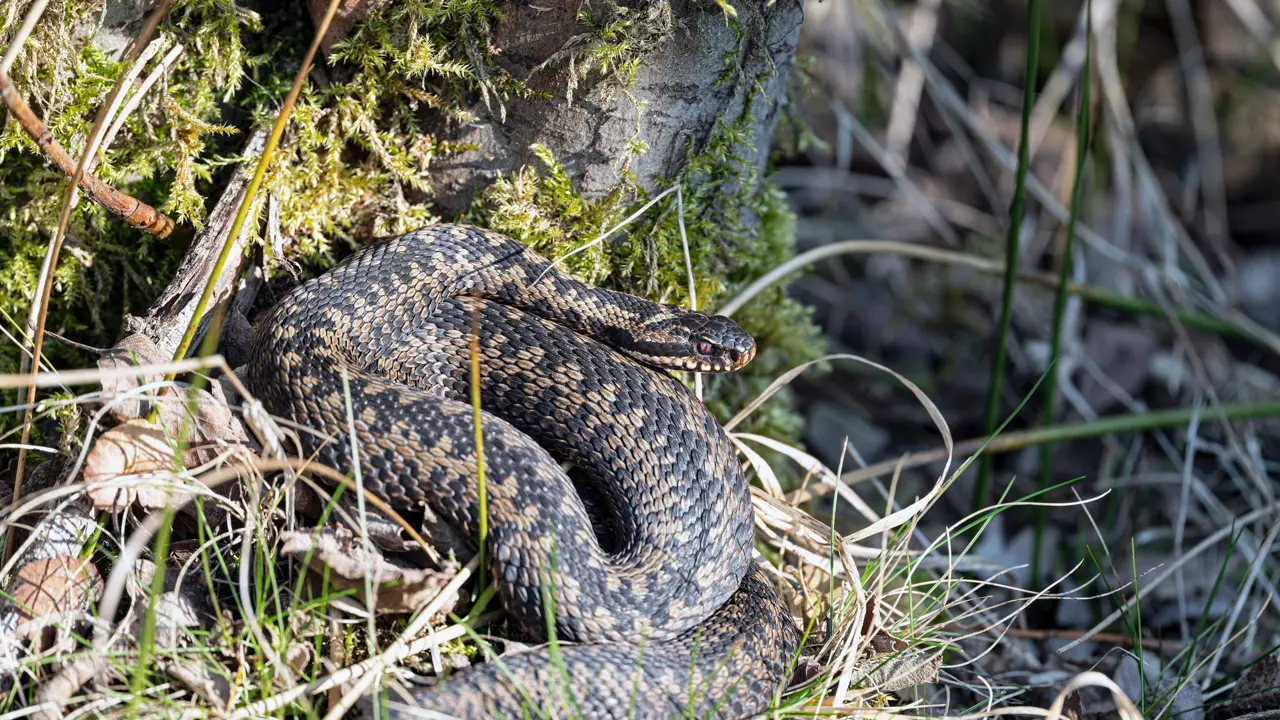
Alabama is home to roughly 50 species of snakes, but only six are venomous to humans statewide. North Alabama has a mix of both venomous and nonvenomous species, many of which play important roles in controlling rodents and other pests.
Venomous Snakes in North Alabama
Six native snake species in Alabama are medically significant to humans. In North Alabama, the most likely venomous snakes to encounter are copperheads, cottonmouths (water moccasins in suitable wet habitats), timber rattlesnakes, and pygmy rattlesnakes, with eastern coral snakes and eastern diamondbacks mainly in the southern part of the state.
| Species | Typical Habitat in North Alabama | General Appearance | Notes |
|---|---|---|---|
| Copperhead (Agkistrodon contortrix) | Wooded hillsides, rocky outcrops, brush piles, edges of creeks | Light tan to copper with darker hourglass crossbands, triangular head, vertical pupils | Common in upland and suburban edges; often the most frequently encountered venomous snake in northern Alabama. |
| Cottonmouth / Water Moccasin (Agkistrodon piscivorus) | Swamps, ponds, slow-moving streams, marshy lake margins | Thick-bodied, dark olive to brown, often with faint bands; white mouth lining when gaping | More associated with permanent water; can bask on logs or near shorelines. |
| Timber Rattlesnake (Crotalus horridus) | Forest ridges, rocky slopes, remote woodlands | Gray, tan, or yellowish with dark crossbands and a rattle; often a rust-colored dorsal stripe | Generally shy but potentially dangerous due to size and venom yield. |
| Pygmy Rattlesnake (Sistrurus miliarius) | Open woods, scrub, edges of wetlands | Small, gray to tan with dark blotches and often a reddish-brown dorsal stripe | Small rattle can be hard to hear; bite can still be serious and requires medical care. |
| Eastern Coral Snake (Micrurus fulvius) | Primarily coastal plain; rare and unlikely in far north Alabama | Red, yellow, and black rings, with yellow bands touching red | Highly venomous but secretive; bites are rare. |
| Eastern Diamondback Rattlesnake (Crotalus adamanteus) | Mostly southern Alabama, dry pine flatwoods, coastal habitats | Large, heavy-bodied with distinct dark diamond pattern bordered by lighter scales | Largest rattlesnake species; presence in far northern Alabama is unlikely. |
Common Nonvenomous Snakes in North Alabama
North Alabama supports many nonvenomous snake species that help control rodents, insects, and other small animals. These snakes can resemble venomous species, so it is best not to handle them even if you believe they are harmless.
Rat Snakes (Pantherophis spp.)
Black rat snakes and gray rat snakes are among the most common large nonvenomous snakes in Alabama. They are excellent climbers and often found in barns, wooded edges, and around buildings where rodents are present.
Garter and Ribbon Snakes (Thamnophis spp.)
Slender, striped snakes commonly found near water, damp meadows, and yards. They are nonvenomous to humans and feed on small amphibians, fish, and invertebrates.
Eastern Hognose Snake (Heterodon platirhinos)
Known for its upturned snout and dramatic defensive displays, including flattening its neck, hissing, and playing dead. Though it may look intimidating, it is nonvenomous to humans.
Kingsnakes and Milksnakes (Lampropeltis spp.)
Typically patterned with bands or blotches and often mistaken for venomous species. These snakes prey on other snakes, including venomous ones, as well as rodents and lizards.
Many other small, secretive nonvenomous snakes occur in North Alabama (including worm snakes, ringneck snakes, brown snakes, and earth snakes), but they are rarely seen by casual observers.
Basic Identification Tips
While not every snake can be easily identified without experience, some general traits can help distinguish venomous from nonvenomous species in Alabama. There are exceptions, so these guidelines should never replace caution and distance.
Pit Vipers (Copperheads, Cottonmouths, Rattlesnakes)
- Typically have a more triangular or arrow-shaped head with a noticeable neck.
- Vertical, cat-like pupils (though this is hard to see safely at a distance).
- Heat-sensing pits between the eye and nostril on each side of the head.
- Rattlesnakes have a rattle at the tail; pygmy rattlesnake rattles can be hard to hear.
Nonvenomous Look-Alikes
- Heads often more slender, gradually tapering from the neck.
- Round pupils (again, do not get close just to check this feature).
- Patterns may mimic venomous snakes but lack the other pit viper characteristics.
- Will usually flee rather than stand their ground if given space.
Preventing Snake Encounters and Bites
Most snakebites occur when people accidentally step on or near a snake, or when they attempt to handle or kill it. Simple precautions significantly reduce the risk of a bite.
- Watch where you place your hands and feet, especially in tall grass, leaf litter, or rocky areas.
- Wear closed-toe shoes or boots and long pants when walking through brush, woods, or near water.
- Use a flashlight when walking outside at night, particularly around woodpiles, rock piles, or brush.
- Do not reach blindly under logs, rocks, or into holes; use a tool to move objects if needed.
- Keep yards and campsites clear of tall grass, junk piles, and debris that may shelter snakes.
- Teach children to observe snakes from a distance and never attempt to pick them up.
Tips on Avoiding Snakebites While Hiking
Simple habits on the trail greatly reduce your risk of encountering a snake at close range or being bitten. Most precautions involve watching your step, choosing appropriate footwear and clothing, and giving wildlife plenty of space.
- Stay on established, well-used trails instead of walking through tall grass, thick underbrush, or rock piles off-trail.
- Wear sturdy, closed-toe hiking boots and long pants to provide extra protection for feet, ankles, and lower legs.
- Look carefully before you step, especially when moving through leaves, stepping over logs, or crossing rocky areas.
- Step on top of logs and rocks first, then down, rather than stepping directly over where you cannot see the landing spot.
- Use trekking poles or a walking stick to probe areas of tall grass or brush before stepping into them, particularly in warm weather.
- Avoid placing your hands where you cannot see, such as under rocks, into holes, or behind logs and vegetation.
- Keep pets on a leash and children close to the trail so they do not wander into brushy or rocky areas where snakes may be resting.
- Be especially alert at dawn, dusk, and after warm days, when snakes may be more active or lying along trails to bask.
- If you see a snake on or near the trail, stop, give it plenty of space, and either wait for it to move away or take a wide detour around it.
- Do not attempt to pick up, move, or kill snakes; most bites occur when people try to handle or disturb them.
Planning your route, checking conditions in advance, and carrying a basic first-aid kit and charged cell phone add an extra layer of safety for you and your group.
What to Do if You Are Bitten by a Snake
Any snakebite should be taken seriously, particularly if the snake might be venomous. The priorities are to get to emergency medical care quickly and to avoid actions that can worsen injury.
Immediate Steps
- Get away from the snake so you are out of striking distance. Do not try to capture or kill it.
- Call 911 or local emergency services immediately, especially if the snake may be venomous or you have any concerning symptoms.
- Keep the bitten person as calm and still as possible to help slow the spread of venom.
- Remove rings, watches, or tight clothing near the bite site because of expected swelling.
- Keep the bite area at or slightly below the level of the heart unless instructed otherwise by medical personnel.
- If possible and safe, take a photo of the snake from a distance to assist with identification. Do not waste time or risk another bite trying to get a better picture.
What Not to Do
- Do not cut the wound, attempt to suck out venom, or use a snakebite kit.
- Do not apply ice directly to the bite or immerse the limb in ice water.
- Do not apply a tourniquet or tightly constrictive band; this can cause more tissue damage.
- Do not drink alcohol or caffeine, which can affect circulation and complicate treatment.
- Do not attempt to drive yourself if you feel faint or have significant symptoms; have someone else transport you if EMS is not immediately available.
At the hospital, clinicians can monitor vital signs, pain, swelling, and lab values and decide whether antivenom is indicated. Even bites that later prove to be “dry” (no significant venom injected) need medical evaluation, observation, and tetanus status review.
When to Seek Emergency Care
You should seek immediate emergency care for any suspected venomous snakebite, particularly if any of the following occur within minutes to hours of the bite.
- Increasing pain, swelling, or bruising around the bite.
- Nausea, vomiting, dizziness, or feeling faint.
- Difficulty breathing, swallowing, or speaking.
- Weakness, tingling, or numbness of the face or limbs.
- Changes in mental status, confusion, or agitation.
- Rapid spread of discoloration or blistering around the bite site.
Children, older adults, and people with underlying medical conditions are at higher risk of serious complications and should be evaluated without delay.
Snakes and Outdoor Recreation in North Alabama
North Alabama’s forests, bluffs, and waterways support a healthy snake population, which is a sign of a functioning ecosystem. With basic awareness and precautions, you can safely enjoy hiking, camping, fishing, and other outdoor activities while minimizing your risk of snakebite.
- Stay on established trails when hiking and avoid walking through dense undergrowth when possible.
- Inspect around tents, RV pads, and cabins before stepping out at night or early in the morning.
- Store food securely and avoid attracting rodents, which in turn attract snakes.
- Respect wildlife; observe snakes from a distance and remember that their role in controlling pests benefits people and the environment.