
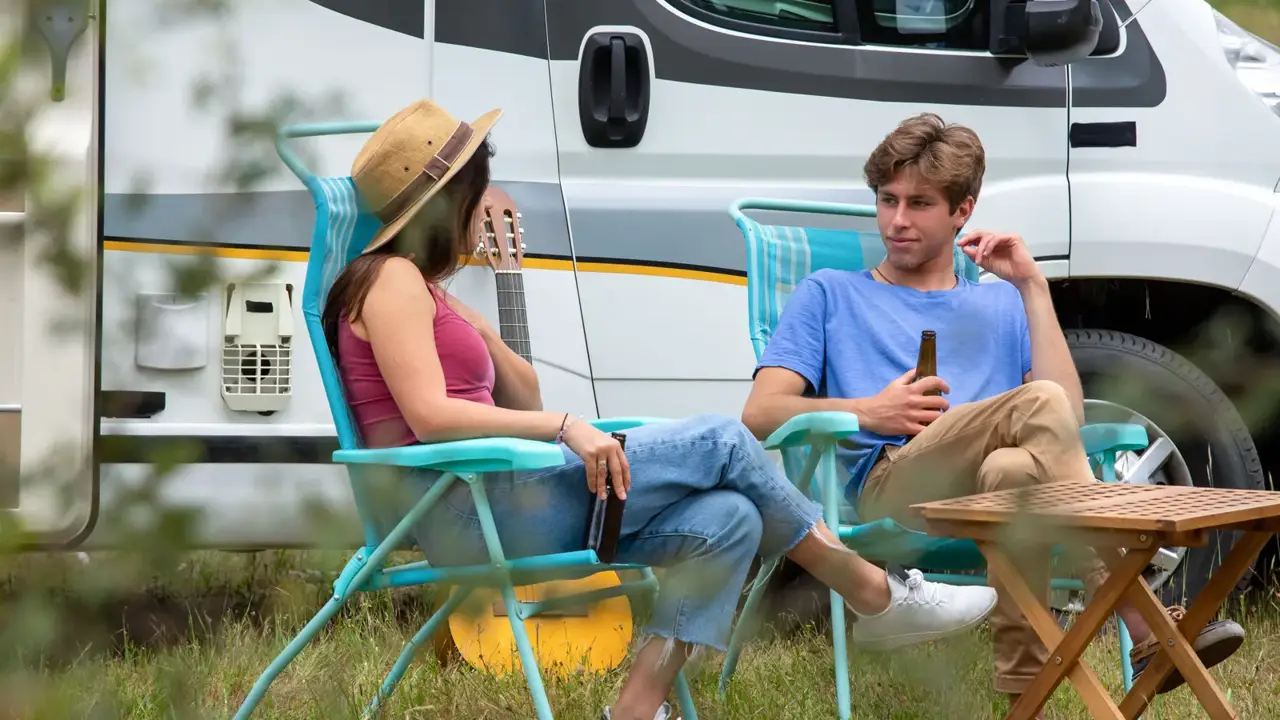
Tent camping and RV camping can both deliver memorable time outdoors, but they create very different trips. A tent-and-sleeping-bag trip prioritizes simplicity, immersion, mobility, and a closer connection to the natural setting; RV camping prioritizes comfort, weather protection, convenience, and a more predictable experience.
Neither is universally “better.” The right choice depends on the kind of outdoor experience you want, the conditions you expect, who is traveling with you, your budget, your physical comfort needs, and how much preparation you are willing to accept.
Quick answer
Choose tent camping if you want to travel light, sleep closer to nature, accept fewer conveniences, and are comfortable managing weather, cooking, sanitation, and sleeping comfort with minimal gear.
Choose RV camping if you want dependable shelter, a real mattress, climate control, food storage, a private bathroom or easy access to facilities, and an outdoor trip that remains comfortable for children, pets, older adults, or travelers with health or mobility constraints.
For many families, couples, and first-time campers, RV camping is the easier entry point. For campers seeking a more rugged, unplugged, lower-impact outdoor experience, primitive tent camping can be deeply rewarding.
Side-by-side comparison chart
| Category | Tent camping | RV camping |
|---|---|---|
| Basic experience | You sleep directly in the outdoor environment, with a tent and sleeping system as your primary shelter | You bring a self-contained living space, often including beds, kitchen equipment, power, storage, and sometimes a bathroom |
| Comfort | Lower baseline comfort; depends heavily on tent quality, sleeping pad, bag temperature rating, site selection, and weather | Higher baseline comfort; mattress, seating, lighting, climate control, kitchen equipment, and protection from rain or wind |
| Connection to nature | Very high; you hear the forest, rain, wind, birds, insects, and nighttime activity more directly | High, but more buffered; you can enjoy outdoor space while retreating indoors when desired |
| Cost to begin | Usually lower; basic tent, sleeping bag, sleeping pad, stove, lighting, and safety gear can be acquired gradually | Usually much higher; RV purchase or rental, tow vehicle in some cases, maintenance, insurance, fuel, storage, and campground fees |
| Ongoing travel cost | Often lower; smaller campsites, less fuel, simpler meals, and fewer vehicle-related expenses | Often higher; fuel use, RV-site fees, maintenance, insurance, repairs, propane, and potentially storage costs |
| Setup time | Moderate; tent pitching, sleep-system setup, food organization, lighting, and weatherproofing take time | Variable; can be quick at a pull-through site, but leveling, utility hookups, awnings, stabilizers, and gear setup may add time |
| Packing and storage | Requires careful packing; space is limited and gear must be compact, dry, and organized | Easier to carry more gear, clothing, food, chairs, bikes, games, and specialty equipment |
| Sleep quality | Highly variable; excellent with the right pad, bag, pillow, and quiet site, but sensitive to ground, noise, temperature, and moisture | Generally more consistent; real bedding and more controlled temperature make sleep easier for most people |
| Weather protection | More vulnerable to rain, wind, heat, cold, mud, lightning, and humidity | Stronger protection from changing weather; air conditioning, heat, insulation, and indoor space improve resilience |
| Bathroom access | Depends on campground facilities, vault toilets, portable options, or backcountry rules | Many RVs have a private toilet and shower; even without one, developed RV sites often have nearby facilities |
| Cooking | Simple and outdoors-focused; camp stove, grill, fire ring, cooler, and minimal cleanup | More flexible; refrigerator, stove, microwave, larger food storage, counter space, and protected meal preparation |
| Food storage | Limited cooler capacity; requires close attention to ice, wildlife, safe storage, and meal planning | More storage, often refrigeration and freezer space; easier to carry fresh food and prepare multi-day meals |
| Mobility after arrival | Very flexible; drive a regular vehicle to trails, towns, and attractions after setting up camp | Depends on the setup; motorhome travelers may need a tow vehicle or must break camp to explore, while towable-RV travelers can unhitch |
| Access to remote sites | Often better; tents can fit in walk-in, hike-in, primitive, and small campsites that cannot accommodate an RV | Limited by road width, slope, low branches, turning radius, pad length, bridge weight limits, and hookups |
| Family travel | Can be fun and economical, but requires more planning, patience, and tolerance for disrupted sleep or bad weather | Usually easier for multigenerational trips, young children, and travelers who want a more controlled environment |
| Pet travel | Works well for active pets, but requires leash control, weather management, safe sleeping arrangements, and campground compliance | Often easier for pet supplies and shelter, but never leave pets unattended in unsafe temperatures or rely on campground power without a backup plan |
| Privacy | Limited, especially for changing clothes, managing hygiene, or resting in poor weather | Greater privacy; useful for couples, families, remote work, health needs, and longer stays |
| Skill level | Requires practical outdoor skills: site selection, weather management, sleep systems, fire safety, food storage, and waste disposal | Requires RV-specific skills: towing or driving, backing, leveling, hookups, tank management, electrical safety, and maintenance |
| Environmental footprint | Can be low when campers use durable surfaces, minimize waste, and follow Leave No Trace principles | Can also be responsible, but usually uses more fuel, materials, power, water, and developed infrastructure |
| Best for | Minimalists, backpackers, budget-minded campers, hikers, climbers, solo travelers, and people seeking immersion | Families, comfort-oriented travelers, longer stays, road trips, pet owners, older travelers, and first-time campers |
Tent Camping
Tent camping is not simply “RV camping without an RV.” It requires a different mindset. You carry or transport only the shelter, insulation, food, water, safety gear, and supplies you truly need. That simplicity can be liberating, but it also means that small planning errors—an inadequate sleeping pad, wet gear, forgotten rainfly, poor campsite selection, insufficient water, or a sleeping bag not suited to the temperature—matter more.
Advantages of tent camping
- Lower barrier to entry than RV ownership or rental.
- More access to remote, scenic, primitive, walk-in, and hike-in sites.
- Greater sense of immersion in nature.
- Easier transportation and parking than a large RV.
- Less equipment to maintain once a basic kit is assembled.
- Strong fit for hiking, climbing, fishing, photography, birding, and backpacking-oriented travel.
- Often a good option for short trips, solo trips, or adults comfortable sleeping outdoors.
Limitations of tent camping
- A greater dependence on weather conditions.
- More exposure to heat, cold, rain, wind, humidity, mud, insects, and noise.
- Less privacy for changing, sleeping, hygiene, and downtime.
- More reliance on shared facilities or primitive sanitation procedures.
- More demanding setup, teardown, drying, packing, and gear cleaning.
- A higher likelihood that poor sleep affects the next day’s enjoyment.
- Less appealing for some young children, older adults, and travelers with pain, sleep, mobility, or medical needs.
Tent camping is likely right for you if…
- You enjoy sleeping close to nature and do not need hotel-like comfort.
- You are willing to learn how to choose a good campsite and manage a sleep system.
- You want access to smaller or more remote camping locations.
- You travel light, hike frequently, or enjoy minimalist outdoor trips.
- You can adapt to rain, changing temperatures, imperfect sleep, and basic facilities.
- You want a lower-cost way to begin camping.
Make tent camping comfortable
A tent alone does not determine comfort. Your sleep system matters most.
- Choose a tent with a full rainfly, adequate ventilation, and enough room for occupants and gear.
- Use a sleeping pad, not just a sleeping bag. The pad provides both cushioning and insulation from the ground.
- Select a sleeping bag appropriate for the forecast; a common conservative approach is choosing a bag rated about 10°F below the lowest expected temperature, then using layers or venting as needed.
- Use a groundsheet only if it fits beneath the tent footprint; a groundsheet extending beyond the tent can collect rainwater underneath.
- Set up on durable, level ground away from low areas where water can pool.
- Bring dry clothing reserved specifically for sleeping.
- Use earplugs, a comfortable camp pillow, and a headlamp with red-light mode.
- Keep food, scented items, and trash managed according to local wildlife rules.
RV camping
RV camping brings the outdoor destination within reach while preserving many comforts of home. A travel trailer, fifth wheel, camper van, motorhome, or truck camper can give you a comfortable sleeping space, food storage, cooking facilities, lighting, shelter, and, in many units, private sanitation.
It is not necessarily effortless. RV travelers need to understand towing or driving limits, electrical systems, water hookups, waste tanks, weight distribution, tire condition, propane, maneuvering, and campground access. But once those basics are learned, RV camping can support easy weekend getaways, multi-week stays, family travel, and extended road trips.
Advantages of RV camping
- More predictable comfort in rain, cold, heat, wind, and insect-heavy conditions.
- Better sleep for many people due to mattresses, climate control, and indoor space.
- More food capacity and easier meal preparation.
- Greater privacy and, in many RVs, access to a toilet and shower.
- Easier accommodation for children, pets, and multigenerational travelers.
- More storage for outdoor gear, clothing, bicycles, fishing equipment, cameras, games, and cooking supplies.
- A useful “home base” after hiking, bird watching, paddling, climbing, or sightseeing.
- Practical for longer stays, remote work, and frequent travel.
Limitations of RV camping
- Higher purchase, rental, insurance, maintenance, fuel, and storage costs.
- Campsite access is limited by RV size, road design, branches, grades, and pad dimensions.
- Towing, backing, leveling, and hookups require skill and attention.
- Repairs can be costly and can disrupt travel.
- RV parks may feel less remote or secluded than primitive sites.
- Large rigs may require advance booking, especially on busy weekends and holidays.
- Some destinations require a second vehicle for convenient exploration after arrival.
- Water, electricity, waste tanks, propane, and battery capacity must be actively managed.
RV camping is likely right for you if…
- A good night’s sleep strongly affects how much you enjoy travel.
- You camp with children, pets, older relatives, or a group with varied comfort needs.
- You value climate control, a kitchen, indoor seating, storage, and private facilities.
- You want to camp during shoulder seasons or in unpredictable weather.
- You enjoy road trips and want your accommodations to travel with you.
- You plan multi-night or extended stays.
- You are willing to learn basic RV operations and budget for ownership or rental costs.
Essential RV trip preparation
- Confirm campsite length, width, hookups, terrain, and whether the site is pull-through or back-in.
- Measure your full rig length, including truck, trailer, bicycles, cargo racks, or towed vehicle.
- Inspect tires, brakes, lights, hitch components, and fluid levels before departure.
- Carry a leveling system, wheel chocks, hoses, electrical adapters, surge protection, and basic repair supplies.
- Confirm whether potable water, sewer, dump-station access, Wi-Fi, cellular coverage, and propane are available.
- Review campground check-in times, quiet hours, fire rules, pet rules, and generator policies.
- Keep a weather eye on wind, heavy rain, lightning, and cold conditions.
- Practice backing and maneuvering in a low-stress location before a first major trip.
Which camping style fits your situation?
| If this sounds like you… | Better starting choice | Why |
|---|---|---|
| “I want to be close to the woods, travel light, and keep the cost low.” | tent camping | It offers outdoor immersion and a smaller initial investment |
| “I want to hike all day but sleep comfortably at night.” | RV camping | A mattress, climate control, shower access, and food storage improve recovery |
| “I am camping for the first time with young children.” | RV camping or a developed tent site | More reliable sleep, bathroom access, shelter, and easier meal management reduce stress |
| “I want to camp near remote trails or in walk-in sites.” | tent camping | Many smaller, more remote sites cannot accommodate RVs |
| “I travel with pets and want reliable shade, shelter, and supply storage.” | RV camping | It can be more practical, provided temperature safety and pet rules are respected |
| “I want a low-tech weekend with no screens and few conveniences.” | tent camping | The limited setup helps create a more unplugged experience |
| “I have back, knee, sleep, mobility, or heat/cold-tolerance concerns.” | RV camping | Greater control over bedding, temperature, sanitation, and recovery time |
| “I want to camp in rain, cold weather, or shoulder season.” | RV camping | It offers a much better margin of comfort and weather protection |
| “I am an experienced hiker, climber, or backpacker.” | tent camping | It pairs naturally with lightweight, access-oriented outdoor travel |
| “I want a convenient base for a long road trip.” | RV camping | It provides storage, food preparation, and repeatable lodging from stop to stop |
Responsible camping applies to both
Whether you sleep in a tent or an RV, good camping means minimizing your impact on the place and respecting fellow visitors. The National Park Service’s Leave No Trace guidance emphasizes planning ahead, using durable surfaces, disposing of waste properly, leaving natural and cultural features undisturbed, minimizing campfire impacts, respecting wildlife, and being considerate of other visitors.
Shared responsibilities
- Check regulations, weather, closures, and site-specific rules before leaving home.
- Camp only in designated or appropriate areas.
- Use established campsites, pads, trails, and access routes.
- Pack out all trash, leftover food, and litter.
- Keep campsites clean and do not leave equipment or supplies behind.
- Store food appropriately and never feed wildlife.
- Respect quiet hours and keep music, lights, and generator use considerate.
- Use fires only where permitted and extinguish them completely.
- Keep pets leashed and clean up after them.
- Protect water quality; avoid washing dishes or disposing of waste near lakes, streams, or drainage areas.
Leave No Trace guidance advises campers to use durable surfaces, avoid fragile vegetation, and, where dispersed camping is permitted, camp at least 200 feet from lakes and streams. Always follow the more specific rules of the campground, park, forest, or public land you are visiting.
A Practical Middle Option
You do not have to choose one camping style forever. A developed tent site can be an excellent first step if you are curious about camping but not ready for an RV. It gives you access to restrooms, water, picnic tables, fire rings, and nearby staff or other campers while preserving the tent experience.
Likewise, an RV trip can be a comfortable outdoor basecamp even if your favorite part of the day is hiking, bird watching, climbing, fishing, or sitting by the campfire. The RV does not make the experience less authentic; it simply changes the comfort level and logistics.
A useful progression for many campers is:
- Start with one or two nights in a developed tent campground.
- Upgrade the sleep system before buying excessive gear.
- Try a cabin, camper van, or RV rental for a weekend.
- Decide whether you value rugged simplicity or mobile comfort enough to invest further.
- Choose the style that makes you more likely to spend meaningful time outdoors.
Final decision
Choose tent camping when you want the simplest, most immersive, and often least expensive path into the outdoors—and when you are prepared to accept less convenience in exchange.
Choose RV camping when you want a comfortable, weather-protected, family-friendly, and repeatable way to travel outdoors without sacrificing a dependable bed, kitchen, storage, and shelter.
The best option is the one that gets you outside more often, keeps your group safe and comfortable enough to enjoy the trip, and leaves the campground, trail, and natural setting in excellent condition for the next camper.