
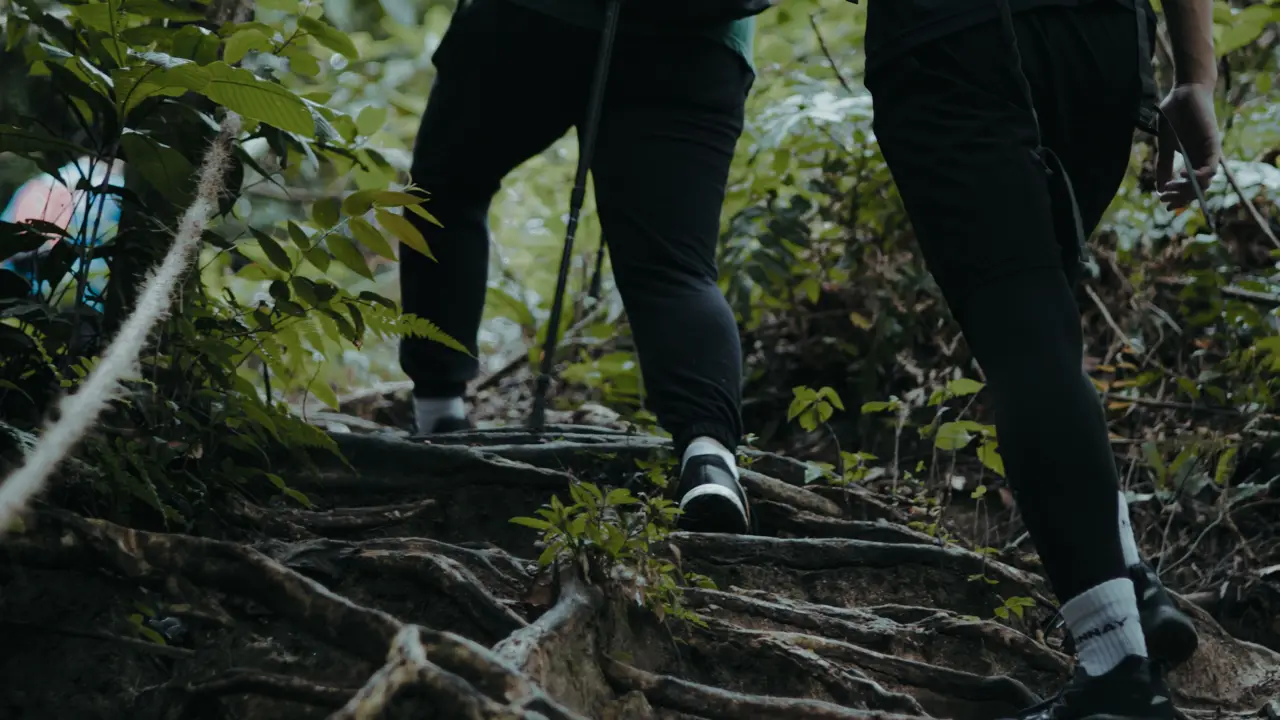
Roots, rocks, loose gravel, and steep slopes are part of what make hiking fun, but they are also common sources of slips, twisted ankles, and trail erosion. The goal is to move in a way that protects both you and the places you came to enjoy.
This guide covers smart movement on uneven ground, low‑noise trail etiquette, packing out every scrap of trash, and how to apply the Leave No Trace principles on your next hike.
Staying Safe on Uneven Terrain
Good footwear, deliberate steps, and awareness of the surface under your boots go a long way toward preventing falls and strains.
Wear the right footwear and use poles when needed
- Choose sturdy hiking shoes or boots with good traction and ankle support, broken in before your trip to reduce blisters.
- Consider trekking poles or a walking stick for added balance on rocky, muddy, or steep sections.
- Adjust pole length so your elbow is roughly at a right angle on level ground; shorten them for climbs and lengthen for descents.
Use careful, balanced steps
- Take smaller steps on uneven ground and place each foot solidly before shifting your weight.
- Keep your weight slightly forward when going uphill and your knees soft (not locked) on the way down.
- On loose gravel or wet rock, use your hands or poles for extra contact points and move slowly.
Protecting the Trail: Travel on Durable Surfaces
Trails exist to concentrate foot traffic and protect the surrounding plants and soil. Leaving the path, even to avoid mud, can quickly widen the trail and cause erosion.
Stay on the established path
- Walk in the center of the trail, even when it's wet, rocky, or rutted, instead of stepping around to the edges.
- Avoid cutting switchbacks or creating “social trails” straight up or down steep slopes.
- Use rocks, gravel, and other durable surfaces when you step aside to let others pass.
Pause and rest without trampling fragile areas
- If you need a break, move just off the trail onto durable ground—rock, sand, or already‑packed soil—rather than into undisturbed vegetation.
- Keep group rest stops compact so you don't sprawl across the trail or widen it unintentionally.
- When possible, choose already‑impacted spots such as established overlooks or clearings.
Move Quietly: Minimizing Noise on the Trail
One of the best parts of hiking is hearing wind in the trees, birdsong, and running water. Loud voices and music carry surprisingly far in the woods and can disturb both wildlife and other hikers.
Keep conversations low and devices quiet
- Use an indoor voice and avoid shouting up and down the trail, especially in canyons and quiet forests.
- Leave external speakers at home; if you use headphones, keep one ear free so you can hear others and wildlife.
- Step a little off trail (on durable ground) if you need to take a longer phone call, and keep it brief.
Be considerate in groups
- Break large groups into smaller clusters to reduce noise and trail congestion when possible.
- When resting, avoid blocking the trail so others can pass without breaking their stride.
- Use quiet cues (hand signals or short phrases) instead of constant calling back and forth.
Respecting Other Hikers
Trails are shared spaces. A little courtesy goes a long way toward keeping encounters friendly and comfortable for everyone.
Know basic right‑of‑way
- Uphill hikers generally have the right‑of‑way; step to the side and let them pass when you're heading downhill.
- Yield to horses and give them extra space; follow any posted guidance specific to the area.
- Step to the same side as your group when letting others pass so the trail stays clear.
Share space kindly
- Offer a simple “hello” or nod when you meet others; it reassures people that you're okay and keeps the mood friendly.
- Avoid stopping in the middle of narrow or rocky sections—move a short distance to a wider spot before taking a break.
- If you're hiking with pets or kids, keep them close when others are passing.
Avoid Litter: Pack It In, Pack It Out
Every wrapper, tissue, or bottle left behind adds up and changes how wild a trail feels. Packing out everything you bring is one of the simplest ways to practice Leave No Trace.
Manage trash and micro‑trash
- Carry a small trash bag or zip‑top bag in an easy‑to‑reach pocket and use it for all wrappers, snack crumbs, and other small items.
- Secure loose items in your pack so tissues, receipts, and bottle labels don't blow away when you open it.
- Pick up litter you find along the way when it's safe to do so; every piece removed improves the trail for the next hiker.
Human and pet waste basics
- Use restrooms or designated facilities when available; otherwise follow local rules for catholes or pack‑out systems.
- Pack out used toilet paper and hygiene products in a sealed bag rather than burying or burning them.
- Always pick up after pets and pack their waste out to a trash can.
Leave No Trace: Core Principles for Uneven Trails
Leave No Trace offers a simple framework for making low‑impact decisions before, during, and after your hike.
- Plan ahead and prepare – Know the route, weather, and rules; bring the right gear for uneven terrain.
- Travel and camp on durable surfaces – Stay on established trails and use rock or packed soil when stepping aside.
- Dispose of waste properly – Pack out all trash, leftover food, and litter, including tiny bits.
- Leave what you find – Enjoy rocks, plants, and historical objects where they are instead of collecting them.
- Minimize campfire impacts – If fires are allowed, use established rings and follow local guidance; otherwise rely on stoves.
- Respect wildlife – Observe from a distance, never feed animals, and store food securely.
- Be considerate of other visitors – Keep noise down, follow right‑of‑way, and respect everyone’s experience.
When you combine thoughtful foot placement, trail etiquette, quiet presence, and Leave No Trace, you protect both yourself and the landscapes you love to explore.