
Waterfalls and canyon views may bring you to Lookout Mountain, but some of its most memorable discoveries are small enough to miss: a delicate wild onion growing in a sandstone depression, a plant that traps insects, or a salamander camouflaged against a shaded rock face. The landscapes around DeSoto State Park and Little River Canyon shelter unusual species whose stories add a new dimension to a camping trip.
DeSoto Bluffs Campground, near Fort Payne, provides a convenient basecamp for exploring these places. This privately owned campground is separate from the campground inside DeSoto State Park, and it offers forest trails and bluff-top views.
This guide highlights species documented in the surrounding region—not a verified inventory of the campground itself. Some have genuinely narrow geographic ranges; others occur more widely but are uncommon, secretive, or closely tied to particular habitats.
Look Closely: The Mountain’s Smallest Gardens
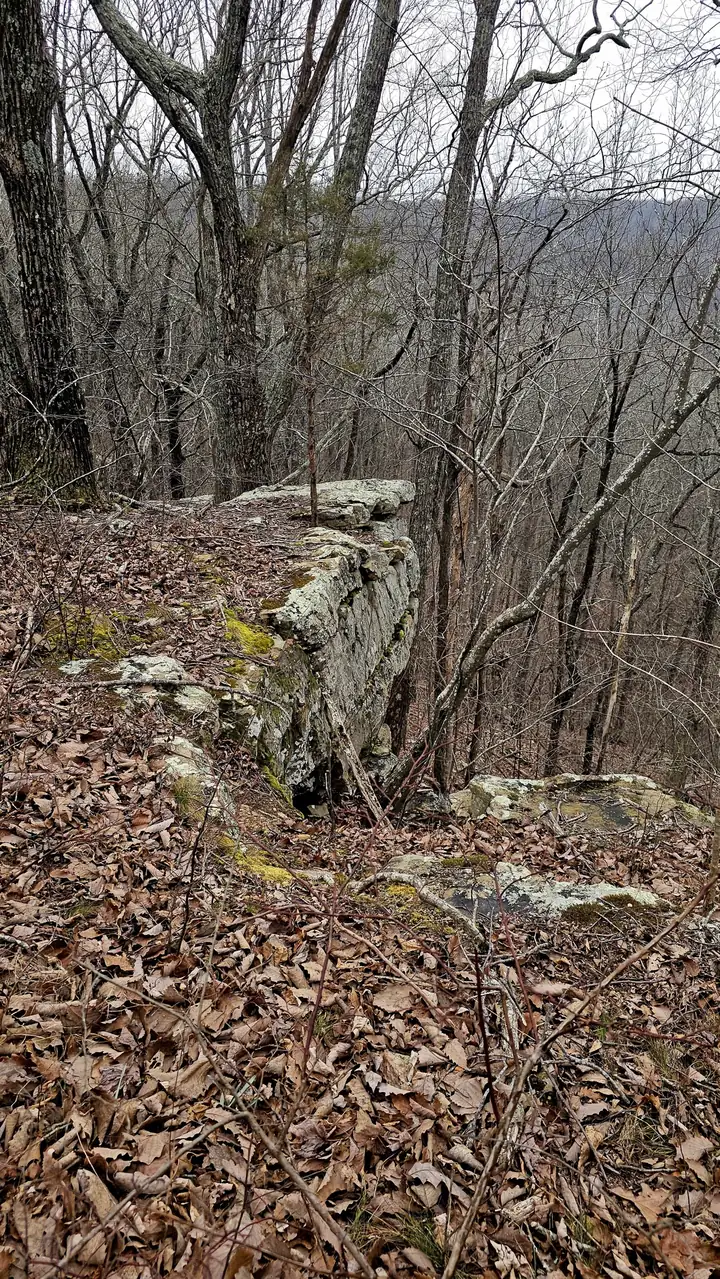
Exposed sandstone may look almost lifeless until you notice its shallow pockets of soil and water. These miniature habitats support plants adapted to thin soils and fluctuating moisture. Pause at a glade and examine the landscape beneath your feet.
Nuttall’s Rayless Goldenrod — Bigelowia nuttallii
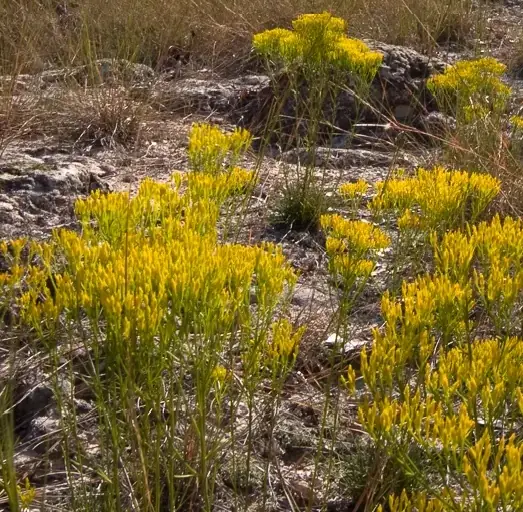
Despite its name, this is not a true goldenrod.
It belongs to a different genus and adds yellow color to sandstone glades in late summer and fall.
Where to explore: It appears on DeSoto State Park’s Little River Hike plant list and in the documented late-season display at Lynn Overlook.
Best season: Late summer through fall.
Little River Canyon Onion — Allium speculae
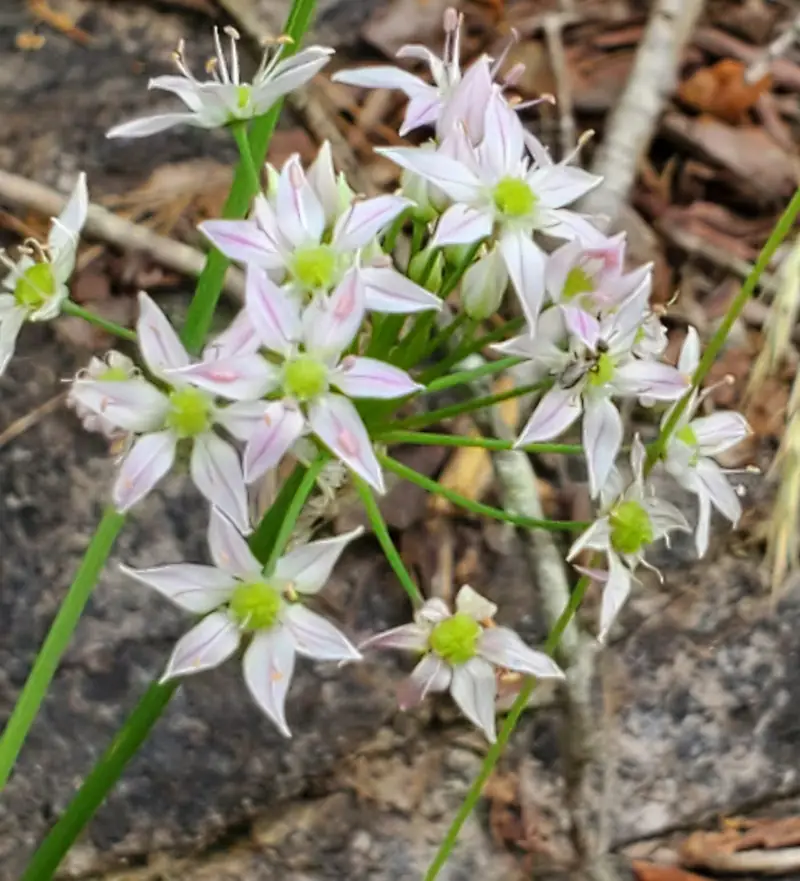
Native only to parts of Alabama and Georgia, this onion grows on northeastern Alabama’s sandstone outcrops and certain outcrops in Georgia.
Its pale, sometimes pink-toned flower clusters are especially attractive against bare stone.
Where to explore: Lynn Overlook at Little River Canyon is a documented place to appreciate its habitat. DeSoto State Park also lists flatrock onion—another name for the species—among plants associated with its Little River Hike.
Best season to view: Late May and June. Enjoy the flowers from established visitor areas. Shallow soil pockets are habitat, not stepping stones.
Elf Orpine
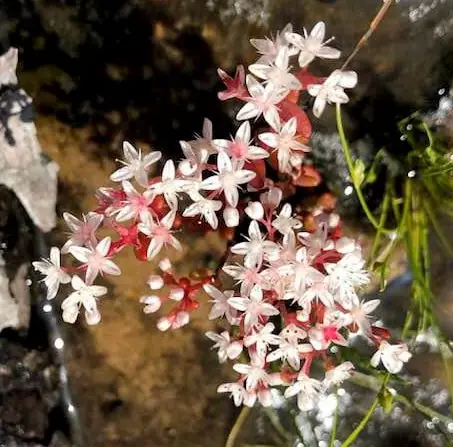
This tiny succulent can turn shallow seasonal rock pools red in late winter and early spring. It is not unique to Lookout Mountain, but its specialized outcrop habitat and diminutive size make it an easily overlooked discovery.
Where to explore: Public sandstone-glade viewing areas at DeSoto State Park and Little River Canyon.
Best season: Late winter and early spring. A close photograph may reveal more than a glance from standing height.
Green Pitcher Plant — Sarracenia oreophila
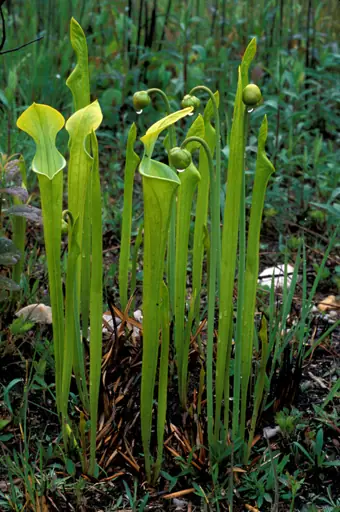
This plant produces hollow, upright leaves that trap insects. Nectar draws prey inside, where insects become trapped and are broken down by digestive enzymes. Pitchers may reach approximately 8–30 inches tall and show purple veining.
The species is federally endangered. Little River Canyon protects an especially important concentration of its populations.
Where to explore: DeSoto State Park has a documented demonstration bog. Ask staff about current access and seasonal viewing rather than searching for sensitive wild colonies.
Best season: Spring offers the added attraction of distinctive flowers.
Green Salamander — Aneides aeneus
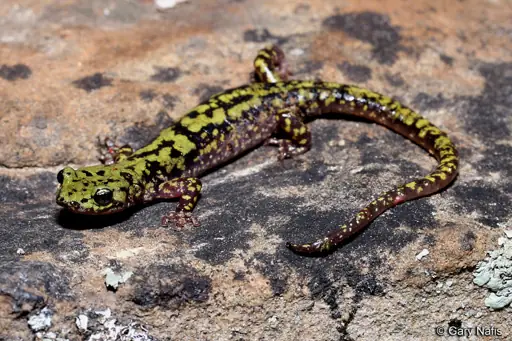
Its mottled markings resemble lichen on shaded stone. A flattened body and squared toe pads help it occupy narrow crevices and climb rocky surfaces.
It occurs elsewhere in the Appalachian region, but Alabama wildlife authorities describe it as rare to uncommon in the state and a species of high conservation concern. Little River Canyon documents its presence.
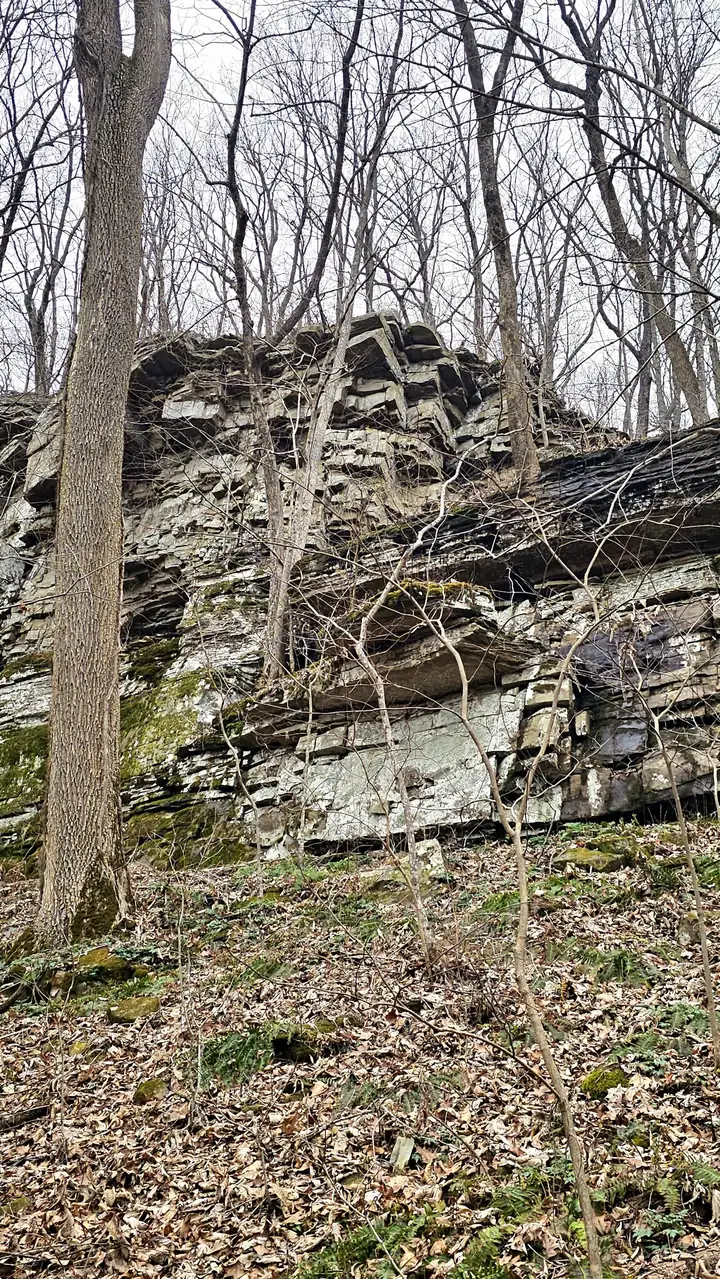
Suitable-looking bluffs do not establish that a particular location contains salamanders. Treat a sighting as a bonus. Never pry into cracks, move rocks, handle an animal, or approach a dangerous cliff edge for a photograph.
Kral’s Water-Plantain — Sagittaria secundifolia
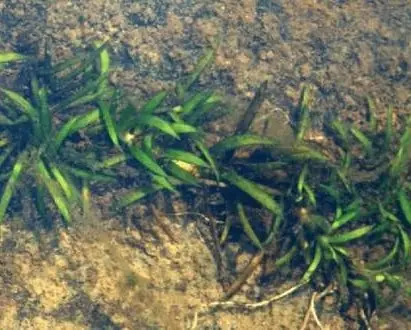
This aquatic plant can grow submerged or extend above water, with leaf shape influenced by depth and current.
The National Park Service describes Little River as one of only three watersheds in the world supporting it.
Federally listed as threatened, it is vulnerable to sedimentation and other waterway disturbances. Please be very cautious not to disturb the habitat of this rare vegetation, while searching for it.
Plan a Simple Nature-Focused Camping Day
Start at camp: Take a walk on DeSoto Bluffs’ property.
Visit DeSoto State Park: Choose the Talmadge Butler Boardwalk for a shorter outing. Ask about the demonstration bog, seasonal plants, and guided programs. Maps and wildflower checklists are available through park visitor facilities.
For a rockier walk, Little River Hike is approximately 1½ miles, beginning and ending at Indian Falls. Check current maps and conditions.
Add a canyon-glade stop: Visit a public viewing area such as Lynn Overlook. Let the season guide expectations: onion flowers in late spring and rayless goldenrod in late summer and fall.
Leave the Discoveries Where They Belong
Pack appropriate footwear, water, binoculars, a camera, and a current map. Trail terrain varies from relatively flat ground to rocky sections and steeper inclines.
Photograph rather than collect. Leave rocks, bark, and wildlife undisturbed. Respect barriers and private property, and avoid sharing precise locations of sensitive colonies.
Learning to recognize a glade or understanding how a salamander fits its rocky surroundings can change how you see the mountain. The waterfalls remain spectacular—but the smaller discoveries give you a reason to slow down.